Most watches are worth less than people hope. A fashion watch from Michael Kors, Fossil or Guess usually sells for about $10 to $60 used, an everyday Seiko, Tissot or Hamilton for $50 to $600, a vintage Timex for $10 to $50, and the typical gold filled American pocket watch from 1890 to 1940 for $40 to $200. The big jump comes with Rolex, Omega, Cartier, Tudor and the high watchmaking houses, where common steel models run about $2,000 to $15,000, and with solid gold cases, where the metal sets a floor. Within a brand, the exact reference, originality, condition and box and papers decide the rest.
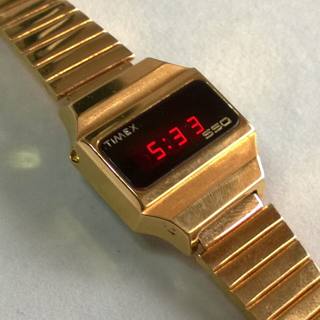
Timex 550 LED Digital Watch (1970s)
Most likely value
$80-130
- Model
- 550 LED digital, as printed on the display window
- Movement
- Quartz, LED digital display
- Era
- Mid to late 1970s, roughly 1976-1979
A fully working display with all segments lit, bright plating and the original box push it toward the top band. A dead module or worn plating drops it to the low band.
What decides the value of a watch?
Brand tier. A Michael Kors or Armani is a licensed name on an inexpensive quartz movement and sells for $10 to $60 whatever it looks like. Rolex, Omega, Longines and Grand Seiko are built by watchmaking companies and hold value for decades. Our watch value guide walks through every tier.
Model and reference. Most inherited vintage Omegas are Seamasters, Geneves and De Villes worth $300 to $1,500, while a Speedmaster or an original pie-pan Constellation runs from a few thousand into five figures, as our vintage Omega guide explains. Most vintage Seikos are $50 to $300, but an original 6139 Pogue or 6105 Captain Willard is usually $600 to $4,000.
Case material. Gold-colored is not gold. Look for 14K, 18K, 585 or 750. Gold filled and plated cases are far more common and carry no gold floor.
Originality. Many old Omegas carry repainted dials, and many vintage Seikos wear replacement dials, hands and bezels. Collectors pay for untouched watches.
Condition, service and completeness. A non-running mechanical watch is worth its running value minus a service, often $300 to $800 for Rolex or Omega and $100 to $250 for most others. Box and papers add roughly 10 to 20 percent on modern luxury pieces, more on collectible vintage.
How to tell if yours is one of the valuable ones
- Turn it over. The caseback often carries a reference or case number, a serial and material marks such as STAINLESS STEEL, 18K, GOLD FILLED or BASE METAL.
- Decode the numbers. On a vintage Seiko, a code like 6309-7040 gives the movement and case, and the six-digit serial gives the year and month, as our Seiko serial lookup shows. On a Rolex, the reference sits between the lugs at 12 and the serial at 6 or on the inner ring, which dates the case, as our Rolex serial lookup explains.
- Open a pocket watch. The movement carries the maker's name and a serial that dates it to the year, and the inside of the case lids is stamped with the case maker and gold content. Railroad grades such as the Hamilton 992B or Illinois Bunn Special bring more, as our pocket watch guide covers.
- Treat a serial as a date, not proof. Copies carry real-looking serials, and box and papers are copied too.
What to photograph
Shoot the dial straight on in soft light, sharp enough to read every word, since the dial shows the model and most signs of a redial. Then photograph the caseback flat, with every engraving legible, and the case side between the lugs where Rolex and others put the reference and serial. Add the crown and the clasp, including any codes inside it. If the case has been opened or has a display back, photograph the movement. For a pocket watch, open both lids and photograph the stamps and the movement. Include the box, papers and any service receipts with numbers readable.
Where to sell, and who can settle it for real
Modern super clones copy the outside of a Rolex or Omega well enough to look right in photos. Only a watchmaker opening the case, or the brand's own service center, settles it, usually for about $25 to $150. Our guides on whether a Rolex is real and whether a watch is real explain what photos can show. A jeweler can test and weigh a gold case, and a written appraisal for insurance or an estate typically costs about $75 to $250 per watch.
To sell, get a dealer offer first. Dealers usually pay 15 to 40 percent less than a private sale. Chrono24 charges private sellers about 6.5 percent, and eBay charges 15 percent on the first $1,000 and 6.5 percent up to $7,500. Important vintage and top-brand pieces go to Phillips, Christie's, Sotheby's or Bonhams, where buyers pay a premium of around 25 percent. Our guide on how to sell a watch compares the routes, and inherited watches helps sort an estate first.
New to this? Start with the method that works for every category: how to find out what something is worth, which compares Google Lens, eBay sold listings, dealers, auctions, appraisers and photo apps.